
How to Handle Protesters at Church: Dealing with Worship Disruptions
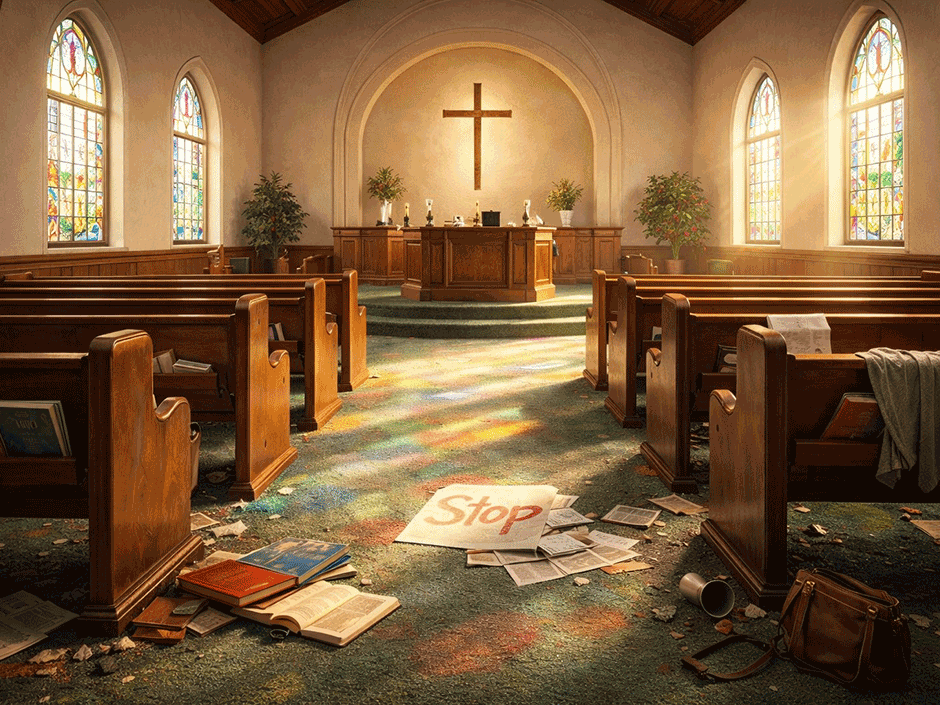
On January 18, 2026, protesters in St. Paul, Minnesota, entered the sanctuary at Cities Church during Sunday worship. Demonstrators who opposed the activities of U.S. Immigration and Customs Enforcement (ICE) agents in neighboring Minneapolis chanted as they filled the church and prevented the service from continuing.
Protesters, who belonged to groups such as Black Lives Matter Minnesota, targeted Cities Church because one of its pastors, David Easterwood, reportedly worked in a local ICE field office. They chanted “ICE out” and demanded “Justice for Renee Good,” the 37-year-old mother who had been shot and killed days earlier by ICE agent Jonathan Ross.
The incident at the Southern Baptist Convention church drew national attention because former CNN host Don Lemon was present. Video went viral of the high-profile journalist confronting Cities Church Pastor Jonathan Parnell, who called the interruption “shameful.” Lemon, meanwhile, referenced the Constitution and freedoms guaranteed by the First Amendment.
Although Lemon said he had the right to cover the anti-ICE protest inside the church, he was later arrested and charged under the FACE Act with conspiracy and interfering with worshipers’ rights. (Keep reading for more information about the FACE Act.) Lemon pleaded not guilty. His attorney called the arrest an “unprecedented attack on the First Amendment” and a “transparent attempt to distract attention from the many crises facing [the Trump] administration.”
U.S. Attorney General Pam Bondi emphasized that under President Trump, Americans “have the right to worship freely and safety.” The federal government, she added, will come after anyone who violates “that sacred right.”
U.S. Assistant Attorney General for Civil Rights Harmeet Dhillon also denounced what she called federal crimes by protesters at Cities Church. “A house of worship is not a public forum for your protest!” she posted. “It is a space protected from exactly such acts by federal criminal and civil laws!”
Pastor Parnell thanked the Justice Department for acting swiftly “to protect Cities Church so that we can continue to faithfully live out the church’s mission to worship Jesus and make him known.”
Many faith leaders applauded how Parnell handled the stressful situation. Dr. Ed Stetzer, dean of the Talbot School of Theology, was grateful that Parnell maintained his composure and told Lemon why congregants were assembled. “Freedom of speech, assemble, and protest does not mean you can disrupt a church service, and it’s just bizarre that Lemon or anyone else thinks it,” said Stetzer.
During the unrest in the Twin Cities, other Americans urged the Department of Justice to investigate any ICE agent that used violence against peaceful demonstrators. Some people took offense when Homeland Security officials labeled concerned citizens as domestic terrorists.
Nekima Levy Armstrong, a Minneapolis activist who leads the civil rights organization Racial Justice Network, accused the U.S. government of “unleashing barbaric ICE agents” on the community. Christians who approve of those tactics “need to check their theology and … hearts,” said Levy Armstrong, who participated in the Cities Church protest.
The controversial Twin Cities immigration crackdown led to another death — and more protests — when a federal agent fatally shot Alex Pretti on January 24.
Protesters at Church: Understanding the Law
Opposition to ICE enforcement in Minneapolis-St. Paul reminds church leaders everywhere of the need to prepare for heated discussions, unrest and even interruptions in church services. Across America, Christian congregations have faced unrest or demonstrations related to social justice issues, politics, military conflicts and even local disputes. Disruptions can occur not just during worship but at other faith-based events.
Some church leaders and faith communities defend current governmental policies, while others speak out to demand change. For both groups, spiritual wisdom and legal understanding are essential.
The First Amendment to the U.S. Constitution guarantees the freedoms of religion, speech, press and peaceful assembly. For assembly (i.e., protests), the government can determine what “time, place, and manner” are appropriate. Demonstrations on public spaces, such as sidewalks and public rights-of-way, are usually protected, as long as people remain nonviolent and don’t obstruct lawful activity. But protesters must comply with local ordinances regarding noise, blocking traffic or obstructing entrances.
Church property, however, is private. When individuals enter without permission, especially during worship, other legal considerations come into play. Groups that interrupt a church service by shouting, impeding access to pews, and preventing worship from continuing are likely violating property rights.
Faith bodies have the right to enforce property boundaries and bar entry to individuals who refuse to respect posted rules. Protesters who enter without permission and don’t leave when asked can be charged with trespassing and interfering with religious exercise.
Interfering with or obstructing someone’s ability to worship may violate state or federal law, including civil rights statutes. The Freedom of Access to Clinic Entrances (FACE) Act was passed in 1994 to protect access to abortion clinics. But the FACE Act also prohibits “force, threat of force, or physical obstruction” that interferes with exercise of religious freedom at places of worship.
Preventive Guidelines for Pastors and Church Leaders
Whether your church is in a small town or a large metro area, it might become a target of protesters someday. Follow these steps to control protests at church and to keep everyone safe:
1. Clarify your position.
Churches must set boundaries and expectations. Post signs that identify private property and state a brief code of conduct. Church leadership must decide ahead of time how to respond to activism that occurs on or near church property. Communicate that position clearly and compassionately with congregants.
2. Focus on worship.
Every Christian church should prioritize worshiping Jesus Christ and caring for the flock. Emphasize that visitors are always welcome to join your church services — as long as guests don’t intend to harass Christian worshipers or block the proceedings.
3. Know your rights and protesters’ limitations.
Consult with legal counsel to understand your city’s property ordinances and your state’s peaceful assembly and trespassing laws. Read up on federal statutes such as the federal FACE Act and how courts tend to apply them. Having a clear, written policy about protests and demonstrations protects your church, its finances and its reputation.
4. Build relationships with local authorities.
Develop contacts with local police, fire departments and city officials. Know ahead of time which emergency numbers to call if a situation escalates. Invite law enforcement leaders to tour your church facility, hear your concerns and offer suggestions. Being proactive builds trust and ensures quicker, informed responses during tense times.
5. Encourage ongoing communication.
Remind church members how to respond if protesters appear. Planning ahead can prevent panic and emotional overreactions. When potential flashpoints arise, publicly address any controversies that might make your church a target.
If appropriate, invite local advocacy groups to meet for discussions. Provide safe, positive outlets for people to express their opinions and concerns. The gospel message speaks to many social issues, so church leaders and churchgoers should seek justice and care for vulnerable people.
Security Steps: How to Handle Protesters at Church
Scripture teaches that vigilance is part of wise stewardship. Although pastors might bristle at the idea of “securing” a church, using caution is wise. Church security can prevent or mitigate most protests at church.
Before anything happens, assess your property’s vulnerabilities; for example, consider if protesters could enter side entrances unnoticed. Train church security staff and volunteers to de-escalate disruptions in a nonviolent manner. Define clear roles, such as who interacts with protesters, who calls law enforcement (and when), and who supports worshipers inside.
Remind security personnel to practice restraint. They shouldn’t engage physically unless a direct threat exists. Try to relocate any protests to designated areas outside the church building. This protects worship as sacred while treating every person with dignity.
If a protest shifts from the sidewalk into the worship area, stay calm and respectful. Don’t respond with any aggression. Someone will likely be filming the incident, and pastors don’t want to go viral for losing their temper or shouting profanities.
Make a safety plan that prioritizes moving children, seniors and vulnerable congregants away from protesters. During the incident at Cities Church, young kids were visibly frightened. Pastor Parnell said families and children were “terrorized,” with some fearing the disturbance involved an active shooter.
Other helpful security measures:
- Conduct background checks on all staff and volunteers.
- Keep the personal information of pastors private or behind password-protected websites.
- Set up security cameras and have people take turns monitoring them during services.
- Discuss whether to lock any church doors to keep ill-intentioned people out of worship.
After any security incident, leadership should debrief what worked and what didn’t. Offer pastoral care, counseling, prayer meetings and follow-up care to help congregants process the event. With calm, age-appropriate language, tell children what happened and assure them they are safe. Realize that fear can linger long after a scary or unsettling event ends.
When Protesters Come to Church
Protests at church aren’t always predictable, but pastors and church leaders can prepare and respond well. When disruptions come to God’s house — whether from within or outside — leaders must display Christ-like courage, humility and compassion.
“If possible, so far as it depends on you, live peaceably with all,” Paul writes in Romans 12:18 (ESV). Let us shepherd congregations wisely, protect the right to worship, extend grace even in conflict, and minister to broken people who need Jesus.
Share this Post:

Looking for More?
Imagine having fresh help in preparing your sermons right at your fingertips, especially during those weeks when your words and ideas are not flowing easily. Homiletics Online won’t write the sermon for you but once you’ve used this treasury of solid content, you’ll wonder how you ever got along without it.
Would you like to see your post on this blog?
We are always looking for talented and passionate writers who want to share their ideas on preaching the Gospel. If that sounds like you, then please use the button to submit a guest post.
Special Installments