
Church Stewardship Ideas During Economic Downturns: Creative Giving When Times Are Tight
The church budget represents a special type of terror for pastors and lay leaders, especially in a difficult economy. During tough financial times, giving often goes down while expenses rise.
High prices and global unrest make discussions about financial stewardship extra challenging. If you wonder how your church will meet its goals or balance its books this fiscal year, you’re not alone. Headlines about the affordability crisis and a possible great recession are stressing out many church leaders.
At the same time, you know that decreased giving isn’t a sign of weakened faith. Church members are human beings dealing with real financial challenges. Families might be paying $400 more per month for groceries than they were a few years ago. Rent, utilities and insurance are up. Tuition and health care costs have skyrocketed. As a result, the check that congregants used to drop in the offering plate got smaller or stopped coming altogether.
But that doesn’t mean you are failing as a pastor. Charitable giving is often one of the first things to feel the pinch when living costs increase. Everyday needs now absorb the money that many Americans once donated to church.
Before we look at solutions, consider this important shift in perspective: Generosity involves more than just money. Jesus described it as a heart issue. In other words, biblical stewardship isn’t limited to wallets, checkbooks and bank accounts.
A culture of giving that makes room for non-monetary contributions not only closes budgetary gaps, it makes people feel personally invested in God’s work. It welcomes members who feel they have little to give financially but can contribute in other ways.
Eight Ways to Broaden the Giving Conversation
Your congregants are probably more resourceful than you (and they) realize. Every Christian leader oversees a congregation full of people who have remarkable things to offer … things that cost real money when purchased on the open market.
Embrace creative giving with these strategies:
1. Recognize that volunteer hours equal real money.
Time really does equal money. Every volunteer who shows up to run the soundboard, teach kindergartners or reset chairs after midweek worship fills a role that would otherwise require a paid church staff member. The key is making that impact visible. Track volunteer hours and attach a dollar figure to them. Then tell congregants what they accomplished together. When volunteers realize their time equaled $80,000 in labor last year, generosity feels like an opportunity, not an obligation.
2. Enlist the skills of tradespeople.
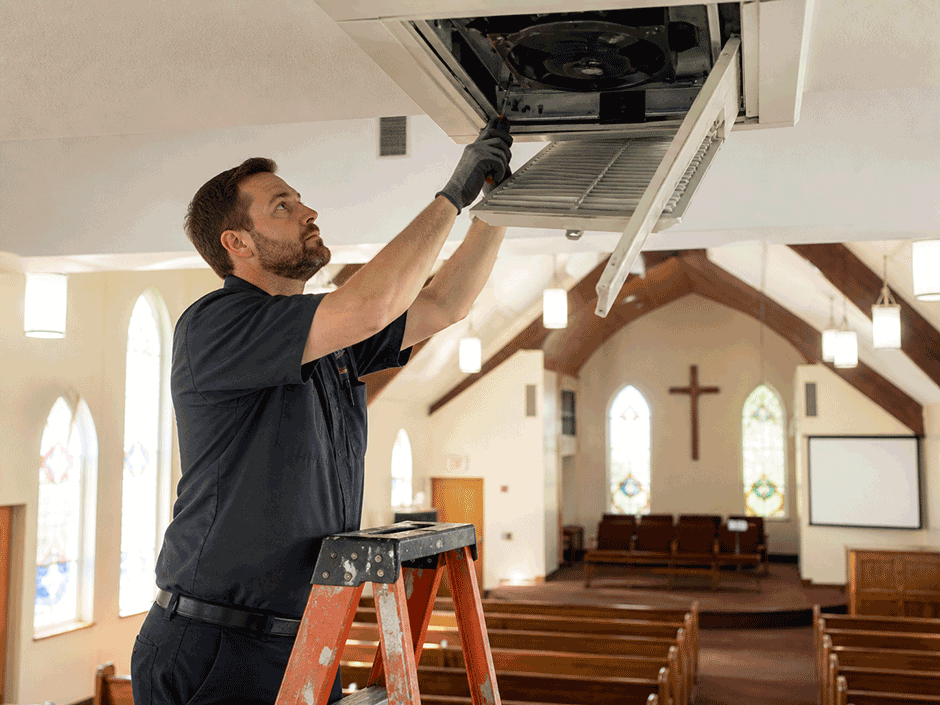
Walk through the church building and list every deferred maintenance item. Include the cracked parking lot asphalt, the bathroom that needs retiling and the HVAC unit held together by a prayer. Now think about the people in your pews. You likely know electricians, plumbers, carpenters, painters and roofers. Market rates for those professionals are significant. When they donate their labor, they are making a real financial contribution — it just doesn’t show up in the offering plate. As a bonus, when a church member completes a project like installing new flooring in a Sunday school room, they feel pride and ownership.
3. Ask professionals to pitch in.
Inviting congregants to offer their expertise is wise financial management by church leadership. It also builds a community in which faithful stewards step up. Attorneys, IT professionals, marketing specialists and grant writers can provide valuable services to churches of any size. An employment attorney who reviews the staff handbook might catch a compliance issue before it becomes a lawsuit. A CPA can advise on nonprofit tax filings and suggest smarter budgeting. And a designer can update the church website so neighbors who search “church near me” will find you.
4. Publish a list of specific needs.
Vague asks result in vague responses. “We need two cases of printer paper, juice boxes for preschoolers and perennials for the north lawn” lands much differently than “We welcome donations of supplies.” Church members who work in retail or business often have surplus inventory or access to materials at a discount. But you must tell them exactly what you need. Keep an updated list and circulate it in the worship bulletin, church newsletter and emails.
5. Let business owners serve through events.
Big programs such as vacation Bible school and community outreach fairs come with real costs: food, printed materials, decorations, childcare, etc. Your congregation likely includes people who specialize in catering, photography and other valuable services. When professionals assist with a specific event, their work gains extra value. In-kind contributions also create higher-quality programs. These donations can make the difference between meeting a ministry goal and canceling an event.
6. Tell donors about stock giving.
This stewardship strategy is underused. Many longtime church members have investment portfolios that have grown significantly. They are in a financial situation where they are asset-rich, even when they feel cash-poor. For example, a retired couple living on a fixed income might have held Apple stock since 2003.
When a donor gives appreciated stock directly to the church, rather than selling it first and donating the cash, they may be able to get a charitable deduction for the full market value of the stock — and pay zero capital gains tax on the appreciation. The church receives full value, while the donor keeps more of their wealth. A member who bought $5,000 of stock that’s now worth $20,000 would normally pay capital gains tax on $15,000 if they sold it. By donating the stock directly, they may be able to deduct the full $20,000 and owe nothing on the gain.
Ask a congregant who works in financial planning to give a brief presentation about this option. During economic uncertainty, smart financial decisions benefit donors and churches.
7. Consider vehicles, real estate and other assets.
The same principle applies to other appreciated assets: vehicles, real estate, business interests, cryptocurrency and personal property. A member who is downsizing might donate a vehicle thechurch can use for transportation ministry. Someone with investment property can include that in an estate plan. Receiving these gifts requires some administrative work, but the impact is significant, especially when cash gifts are down.
8. Pave the way for legacy giving.
For some church members, the most significant contribution they’ll ever make won’t occur during their lifetime. With planned giving, members can include the church in wills, trusts, retirement account beneficiary designations and life insurance policies. These gifts often cost nothing during the donor’s lifetime. But they can fund endowments, building projects, scholarships and mission work that sustains ministry for generations.
If your church doesn’t have a legacy giving program, start one soon. Some of your most faithful members might have been waiting for that option. Mention it in your next sermon series on biblical stewardship. Describe legacy giving as a way to invest in God’s kingdom for decades to come.
Good News for Pastors
If financial pressures and declining attendance have weighed you down, pause a moment to take in some positive recent findings: In-person worship attendance at U.S. congregations has increased for the first time in 25 years. According to the Hartford Institute for Religion Research, median congregational income is also “well above inflation-adjusted expectations.”
The new report also found that volunteer engagement has rebounded since the pandemic. Previously, the Hartford Institute found that more than one-fifth of current worshipers report attending church more than they did before Covid. Nearly 40% joined their current congregation within the past five years, and more than half say their faith has deepened.
People aren’t just coming back to church. They are spiritually hungry and eager to make a difference. And that has big implications for church finance. Over time, newer attendees tend to become frequent volunteers and generous donors. Plus, increased attendance means that future fundraising and stewardship campaigns — especially during times of greater financial stability — will be more successful.
Another important finding: Online giving is now available in 76% of churches, up from 58% in 2020. Electronic, automated giving accounts for about 40% of congregational revenue. The digital option that many churches set up out of pandemic necessity is paying lasting dividends.
“People no longer need to be physically present or even remember to give in the moment,” said Scott Thumma, director of the Hartford Institute for Religion Research.
A Word for the Pastor Reading This at 11 p.m.
The gap between what your congregation can give right now and what your church ministry requires is real. But generosity is alive and growing in U.S. religious institutions and nonprofits. Congregants want to contribute to God’s work but need creative church leadership that shows them how.
That means broadening the giving conversation beyond the offering plate. Invite every person, from the young freelancer to the retired empty-nester, to be part of what God is doing in and through your church. People are willing to contribute in creative ways, so widen the stewardship net. Tell members specifically what you need. And treat giving as a discipleship opportunity, not just a finance strategy.
As more people walk through the doors, your support and relationship-building will bear fruit. Trust Jesus, who multiplied a few loaves and fish, to provide in abundance.
Share this Post:

Looking for More?
Imagine having fresh help in preparing your sermons right at your fingertips, especially during those weeks when your words and ideas are not flowing easily. Homiletics Online won’t write the sermon for you but once you’ve used this treasury of solid content, you’ll wonder how you ever got along without it.
Would you like to see your post on this blog?
We are always looking for talented and passionate writers who want to share their ideas on preaching the Gospel. If that sounds like you, then please use the button to submit a guest post.
Special Installments