
How Churches Can Support Military Families in the Community
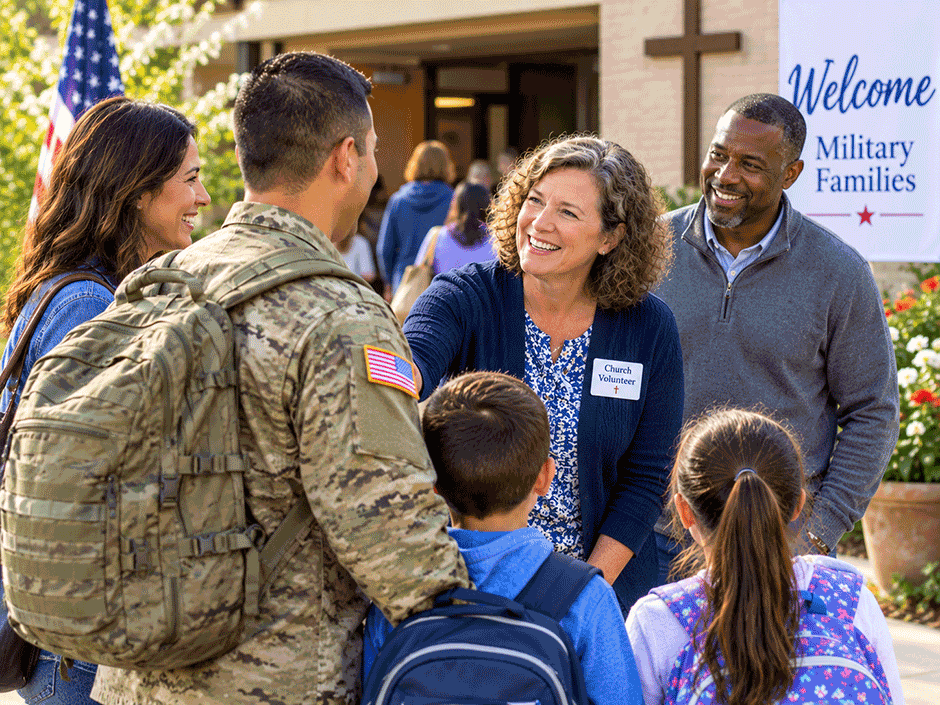
Picture a family walking into your church for the first time, three weeks after a move. One parent may be deployed or stationed overseas. The kids don’t know anyone. Nobody has told them where to find a pediatrician, a job or a friend. This has become routine for many people in the armed forces, as well as Foreign Service employees, aid workers, and the spouses and children who move with them.
A “thank you” on Veterans Day only goes so far. These families need a casserole, a ride to school and someone who knows the children’s names. The type of support that makes a new town start to feel like home.
Your church doesn’t need to be near a military base to reach out. That’s because most military families live in civilian neighborhoods, and some are probably closer than you think. Many are struggling, too. Up to 40% of military families deal with food insecurity, and recent conflicts have added to the strain.
Here are seven ways your church can help. (Hint: None requires a military ministry.)
Why Many Military Families Can Use a Hand
According to the U.S. Department of Defense, America has about 2.4 million family members of active-duty and Selected Reserve service members. That figure includes about 1.4 million children. Each year, hundreds of thousands of military families must relocate for new assignments.
After packing up and moving to a new town, families begin searching for jobs and childcare, enrolling kids in new schools, choosing new healthcare providers, and finding a new church home. Even after they’re settled, family members face financial and emotional stress, plus separation from loved ones.
Military families who responded to a 2025 survey from Blue Star Families said they are especially worried about military spouse employment, economic instability, childcare costs and access to balanced meals. Of 10,000 families surveyed by the Military Family Advisory Network between October 2025 and January 2026, about 40% reported food insecurity — up from 16% in 2023.
Frequent relocations make it tough to form roots in a local community. For Foreign Service families, language barriers and limited job options add to the sense of isolation.
The Iran war and economic downturn create additional uncertainties. “What you’re seeing on the news is their life,” says Besa Pinchotti, CEO of the National Military Family Association. “It’s just exacerbated. It’s very stressful, and it just continues to get harder.”
Kathy Roth-Douquet, co-founder and CEO of Blue Star Families, said the nonprofit is experiencing record demand for services. On a September 28, 2026 episode of the “Federal Drive” podcast, she cited childcare access and a sense of belonging as the top needs of military families. Roth-Douquet encouraged awareness, noting that most of these families live in civilian neighborhoods, not on bases.
In August 2026, the federal government formed a Military Spouse Commission to explore employment, housing, childcare and deployment support. Local congregations can assist with many of these needs in unique ways. How can your church welcome service members and support military spouses and children?
7 Ways Churches Can Support Military Families
Your church doesn’t need a separate military ministry or a dedicated chaplain to reach military personnel and families. Use these steps to make a difference and grow the body of Christ:
1. Make it easy for people to find you.
If your church is near a military installation, training facility or airport, you are likely around more military and government families than you realize. But unless your church is visible (and appears in online search results), you may never meet these people.
Work with the communications team to keep the church website and social media pages up to date. Include worship times, contact information and friendly photos of people. Reach out to a local military chaplain or veterans affairs office to be listed as a church that welcomes military families. Real estate agents or property management companies might include your church information in their welcome packets.
If you’re near a base or training hub, hang a “New to the Area?” banner out front during transfer season. Set up a booth at carnivals and seasonal festivals. Pastors and volunteers can participate in a Memorial Day or Independence Day parade.
2. Extend a warm welcome and plug people in right away.
Developing roots is challenging for military families. So enthusiastically welcome people for however long they can stay.
Ask a designated greeter or small team to notice new faces and hand out welcome packets. Include information about church programs and classes, nearby stores, doctors, schools and free or low-cost entertainment options. Save families time by listing which retailers and restaurants offer military discounts.
Don’t make newcomers hunt for places to fit in. Point them to an adult Bible study or small group that’s welcoming to new arrivals. Introduce children to their Sunday school teachers and classrooms right away. When you learn children’s names, they’ll feel seen and loved.
Other ideas: Host monthly Meet the Pastor coffee dates and a semi-annual Volunteer Fair. Remind congregants to chat with newcomers so they don’t have to navigate church on their own.
3. Assist military spouses with job-hunting.
Why is unemployment high among military spouses? They often have résumé gaps due to frequent moves. Some licensing requirements don’t transfer from state to state, and employers can be hesitant to hire people who will relocate again soon. Overseas, people face language barriers and work-authorization rules.
Congregants who own businesses or work in HR can connect with job-hunters. In the church newsletter, share remote and flexible job opportunities that members know about. A military spouse might land a position after attending a networking event.
If possible, offer scholarships for military family members in the congregation. Donors might cover the costs of licensing exams and continuing education. Because the lack of affordable daycare often interferes with employment, invite military families to join a childcare co-op or parenting group in your church or community.
4. Meet families’ basic needs.
While sharing the good news of Jesus Christ, assist people in a way that preserves their dignity. Many families have the following basic needs:
- Food. Host a food pantry at your church or partner with community food banks. Stock commissary-type staples and offer discreet pickup options. When a service member is deployed, set up a meal delivery schedule for the family.
- Clothing and shoes. Offer a free clothing closet at church. Families on a tight budget will appreciate children’s clothing, school uniforms, winter coats, shoes and sports equipment.
- Back-to-school needs. Every August, collect new backpacks, notebooks, binders, calculators, etc.
- Childcare. Parents Night Out programs, emergency drop-in care and volunteer babysitting (with background-checked volunteers) give moms and dads a much-needed break. Military families also appreciate church camps and summer programming for children.
- Transportation. Help families arrange carpools for church activities, school events and appointments. If you have a church vehicle, schedule pickups for worship and children’s activities so no one misses out.
5. Step up during deployments.
During deployments and other separations, military spouses must parent alone and face increased stress. They’ll appreciate home-cooked meals and help with household chores, lawn care and car maintenance.
Other ideas: Pair families with a church volunteer for regular check-ins. Create a prayer chain for deployed or overseas families and their loved ones. Make sure the spouse or family at home knows you’re praying for them by name.
Celebrate homecomings, too. Because those require adjustments, provide free babysitting nights so parents can reconnect.
6. Ease the transition when families move.
Send off military families with more than a cake reception. As a going-away gift, collect gas and restaurant gift cards. Provide a referral list of churches in the new destination. A quick email introduction to a pastor can enhance someone’s first Sunday at a new church.
After the move, assign one or two people to check in with the family regularly. Send a care package to the new home with a devotional, a keepsake, snacks and a handwritten note. Keep a prayer chain going, lifting up the family by name after they settle elsewhere.
7. Welcome retired veterans.
Settling down for good can be surprisingly stressful. Ask retired service members how they are doing overall, not just if they’ve found a house yet. Offer a small group or “Life After the Military” class for veterans and their families.
Retirement from military service can lead to a search for purpose, but people might need time before volunteering. When they’re ready, experienced service members can be valuable resources at church. Ask them to oversee a welcome team for incoming military families. Pair a retired veteran or spouse as a mentor to a military family.
Former service members can lead deployment support efforts, share stories with younger families and direct veterans to professional care resources.
Serving the People Who Serve Our Country
A Blue Star Families survey shows most people agree that America should care for military families. Yet less than half say they have supported a military service member or family in the past year. Church leaders and members can change that, expressing thanks through words and deeds.
Build support for military families into the church calendar, with quarterly check-ins, a welcome push each summer and annual training of greeters and small group leaders.
Notice military families in your area and give them a place to belong. Care for people’s needs. Most importantly, share Jesus and his love while these new friends are in your midst.
Share this Post:

Looking for More?
Imagine having fresh help in preparing your sermons right at your fingertips, especially during those weeks when your words and ideas are not flowing easily. Homiletics Online won’t write the sermon for you but once you’ve used this treasury of solid content, you’ll wonder how you ever got along without it.
Would you like to see your post on this blog?
We are always looking for talented and passionate writers who want to share their ideas on preaching the Gospel. If that sounds like you, then please use the button to submit a guest post.
Special Installments